Sienci Labs
A brief compare and contrast exercise to Sienci Labs
Lets start with a baseline introduction of myself and what/who is Sienci Labs, then how they are different from me inside of the CNC ecosystem.
Sienci Labs was originally a startup between Andy Lee and Chris– at the University of Waterloo in Canada, to create low-cost mechanical systems for rapid prototyping. This quickly accelerated into production, starting with Mill One, their first open source desktop CNC. Initially this started through a kickstarter in 2016 when the open source CNC landscape wasn’t fully realized yet. I believe around 3 years later they released the Longmill which was a larger version of the Mill One which generally performed better. Along with this they developed Gsender in 2021 which was an open source G-code sender to easily control CNC machines. Now they are working on the Altmill which is planned to release on kickstarter this year, enabling makers access to industrial level CNC capabilities at a fraction of the standard price point.


On the contrary, I use a Shapeoko 4 as a tool for finishing projects that require larger scale workpieces or materials that cant be 3D printed or cant be 3D printed for low cost, generally working with the CAD → CAM → CNC workflow through programs like Autodesk Fusion, and to explore the CNC hobby and environment. It’s interesting to look at the other side of hobbyist/maker level CNC machining where the development and engineering of these CNC systems are actually done as opposed to CNC machinists and hobbyists/makers.
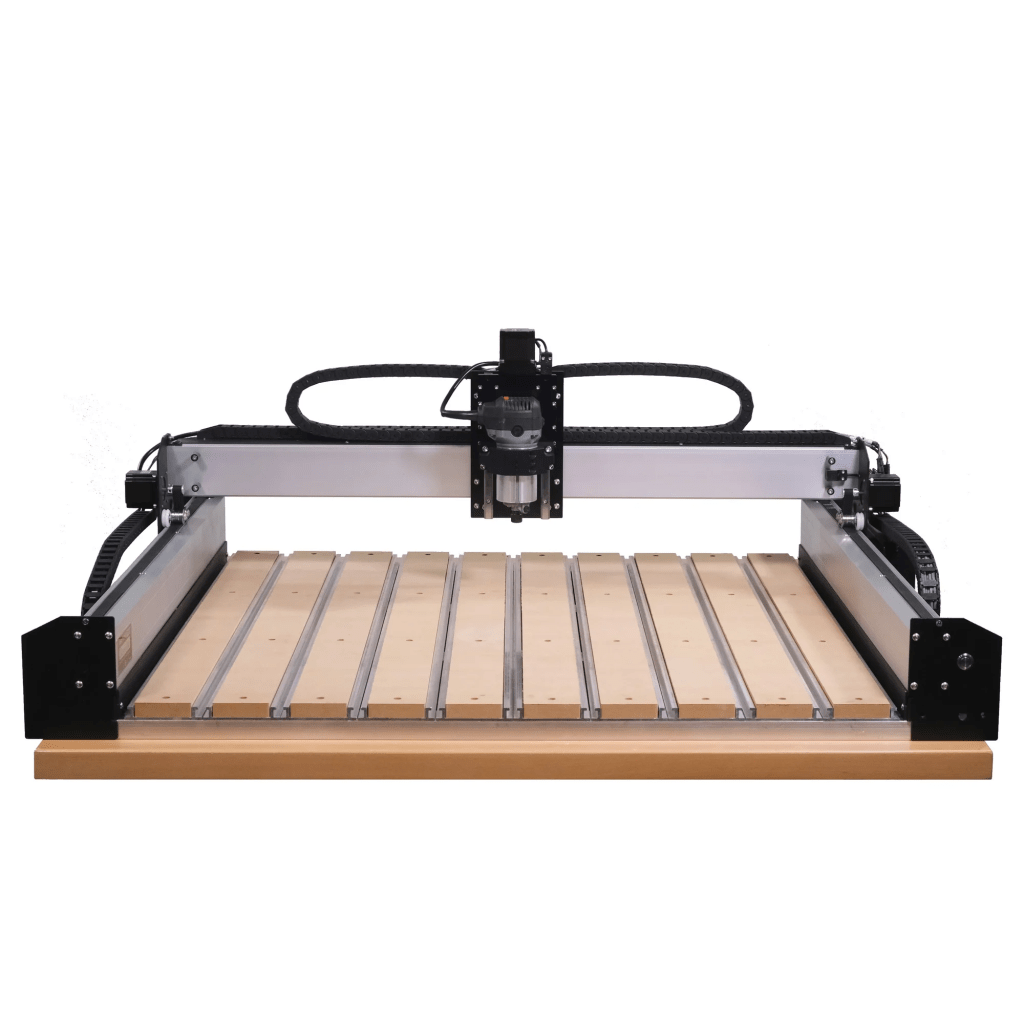
Because I mostly work with our schools Shapeoko 4 it makes sense to write about Carbide and while Carbide makes great CNC machines, I was drawn to Sienci Labs since the impact and evolution of their machines is clear now, they played a significant role in the accessible, low-cost, open source CNC routing community.
Additional info:
Similiar Projects:
- V1 Engineering – Mostly 3D printed CNC’s
- Shapeoko – Affordable/reliable CNC’s
- Onefinity – Empowering makers with proffesional CNC tech
- X-Carve – Beginner friendly + modular
 The Learning Repository